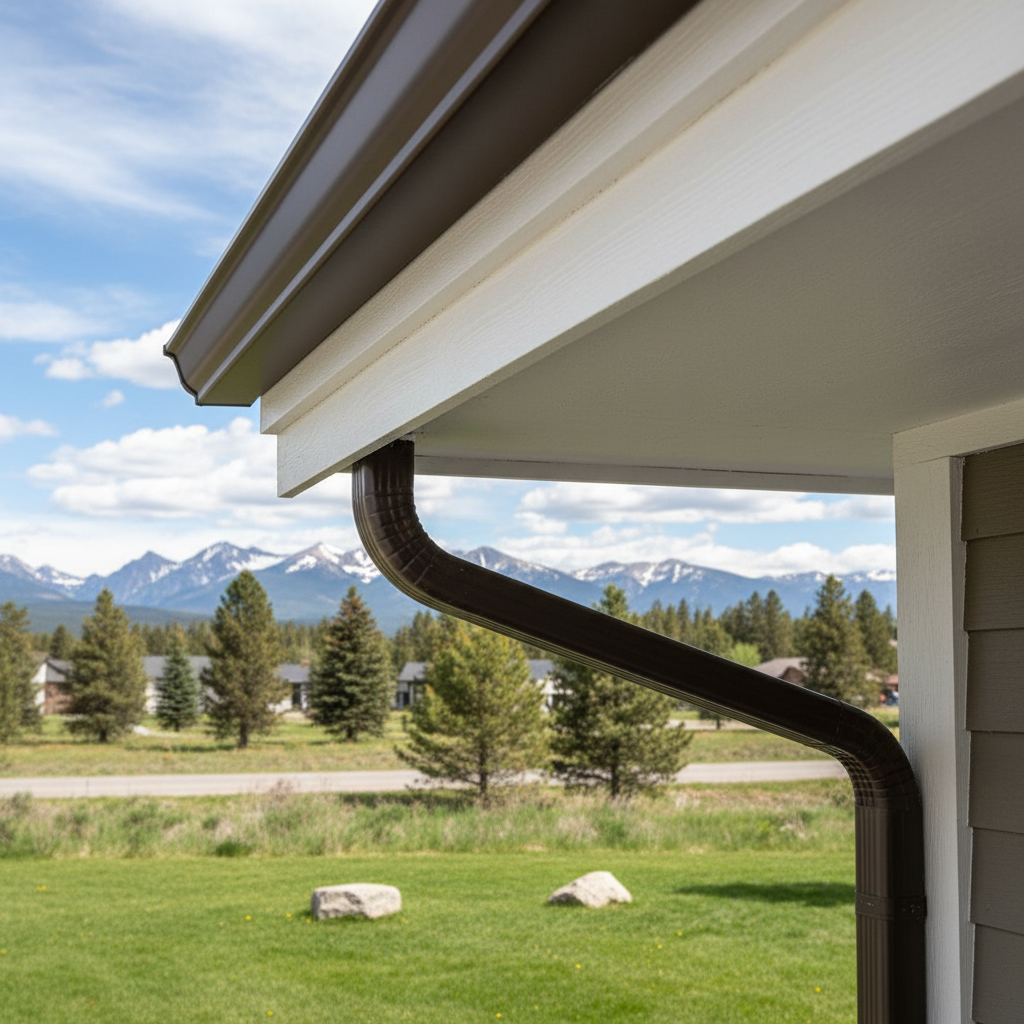
Ever notice how fast moisture can ruin a good piece of wood around here? If you live up near the Evergreen area or out toward Lower Valley, you already know what our Flathead Valley weather does to exterior woodwork. Between heavy winter snowpacks, spring thaw cycles, and sudden summer afternoon thunderstorms, your roofline takes a beating. The boards right behind your gutters—your fascia boards—are usually the first to suffer.
Pacific Gutter Co has pulled down plenty of rotted wood over the years where water sat just a little too long. Pacific Gutter Co wants to talk about what you actually need to do to keep your fascia boards solid and prevent expensive structural repairs down the road.
Warning Signs Your Fascia Needs Attention
You do not need to be a contractor to spot trouble. You just have to look up once in a while. Here is what you should be scanning for:
- Peeling or bubbling paint right behind the gutter line, which usually means moisture is trapped behind the metal.
- Sagging gutters pulling away from the wood because the fasteners have nothing solid to bite into anymore.
- Small holes or chewed edges where woodpeckers or squirrels decided to make a winter home.
- Dark, water-stained patches that stay damp long after the rain stops.
What Regular Maintenance Looks Like
Keeping up with these boards is straightforward, but it does take consistency. Every fall before the first heavy freeze hits Kalispell, clear out your gutters. When gutters clog with pine needles and roof grit, water overflows directly onto the top edge of the fascia. That standing moisture is what rots wood out from the inside.
Give your boards a fresh coat of high-quality exterior paint every few years. Paint acts as an important moisture barrier against our heavy winter snow melt. If you spot a small crack or a minor soft spot, do not wait. Scrape out the loose material, treat it with an epoxy wood restorer, and seal it up tight before the temperature drops below freezing.
How to Extend the Life of Your Repairs
If you are replacing a section or doing a repair, use the right materials. Here in Montana, cedar or properly primed composite boards hold up much better against our wild temperature swings than cheap pine. Make sure your drip edge is actually hanging down past the edge of the roof deck, too. A good drip edge kicks water cleanly into the gutter instead of letting it run down the back side of the fascia board. Pacific Gutter Co sees so many rot issues that could have been avoided simply by having a properly installed drip edge.
When to Call a Professional
Some weekend projects are worth tackling on your own, but fascia replacement can get tricky fast. If the rot has spread past the outer board into the rafter tails or roof trusses, you are dealing with structural framing work. If you are working on a two-story house on a steep slope near the foothills, the ladder work alone is not worth the risk. Bring in a local professional who has the right scaffolding, tools, and experience to handle the job safely. Taking care of your roofline now saves you from a massive headache when the next big Montana storm rolls in.