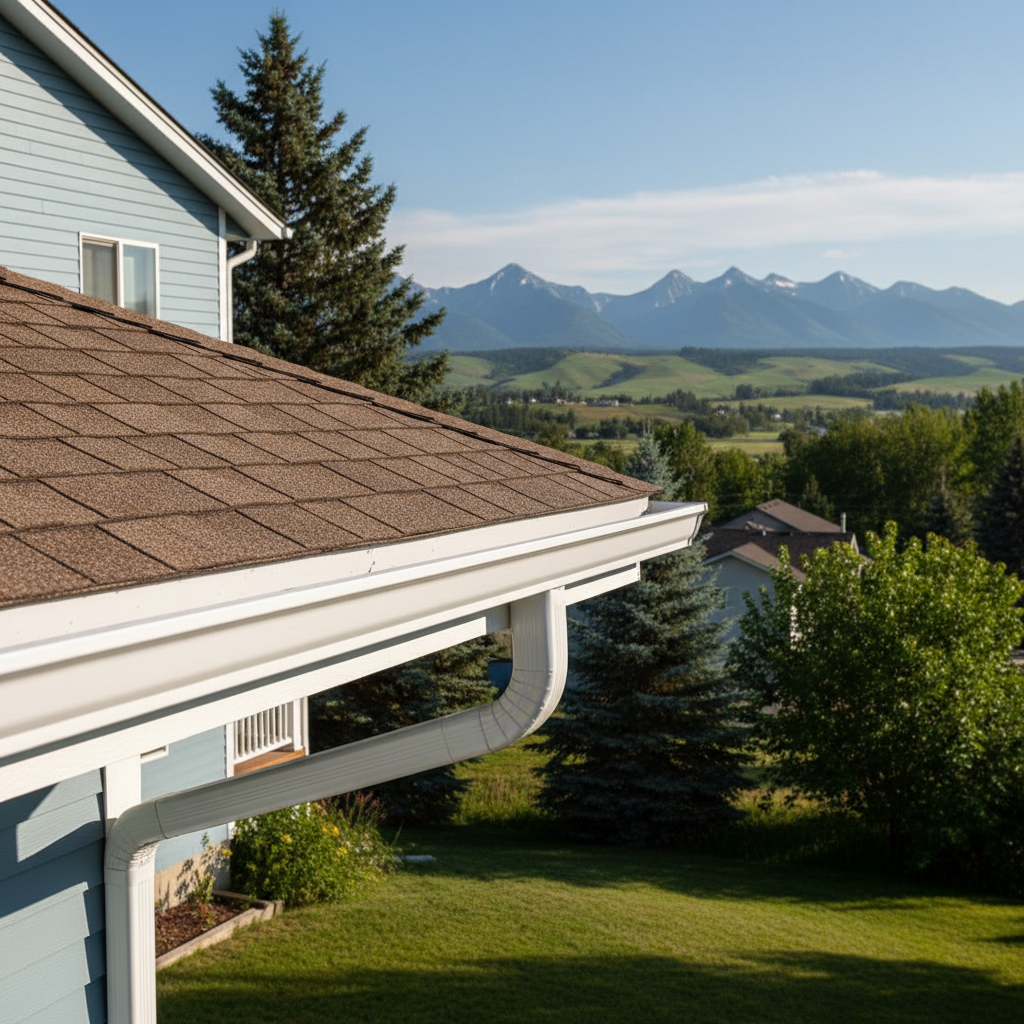
Homeowners in Kalispell, MT often look up at their roofline after a heavy Montana winter and notice that something looks wrong. When fascia boards start to look spongy, cracked, or stained, homeowners have a real problem on their hands. Up here in the Flathead Valley, the weather is very hard on wood. Between the freeze-thaw cycles every spring and the heavy snow loads sitting on the edge of the roof, the fascia takes a very serious beating.
Pacific Gutter Co will walk you through how to spot fascia damage early, what regular maintenance actually looks like, and how to make your repairs last for 15 to 20 years or more.
Warning Signs of Failing Fascia Boards
Homeowners do not need to climb a ladder every week to know something is wrong with their fascia boards. You just need to walk out into your yard in Kalispell, MT and look up at the roofline. Here is what you are looking for:
- Peeling paint or flaking stain right behind the gutter line, usually meaning trapped moisture is pushing its way out.
- Sagging gutters that are pulling away from the wood because the screws no longer have anything solid to bite into.
- Stains or dark streaks running down the face of the board.
- Little piles of sawdust or tiny holes if carpenter ants or woodpeckers decide your rotting wood looks like a good home.
Why Kalispell's Climate is Brutal on Wood
Homes in Kalispell, MT deal with extreme temperature swings every year. One day the temperature is thirty below, and the next week the Chinook winds blow in and melt three feet of snow off your roof in forty-eight hours. That melting water has to go somewhere. If your gutters are clogged with pine needles from the local ponderosas, that water overflows right behind the gutter, soaking the wooden fascia board. When temperatures drop again that night, that absorbed water freezes, expands, and splits the wood right apart.
What Regular Maintenance Looks Like
Staying ahead of fascia rot in Kalispell is not complicated, but it does take consistency. You do not need fancy gear, just a couple of free hours twice a year.
Clear out your gutters every spring and late autumn. If the water flows smoothly away from the roofline, it is not sitting against your fascia. Check your roof drip edge, too. That little piece of metal is supposed to kick water out past the board and directly into the gutter. If it is missing or bent, water runs straight down the back of the system.
Keep an eye on your attic ventilation as well. Poor airflow causes ice dams by letting heat escape through the roof deck, melting the snow from underneath while the eaves stay frozen. That ice buildup forces water right under your shingles and into your fascia.
How to Extend the Life of Your Repairs
When you or a contractor finally get around to replacing a rotted section of fascia, do not just slap a piece of raw pine up there and call it good. Prime all six sides of the replacement board before it goes up. That means sealing the ends and the back so moisture from the framing cannot soak into it. Pacific Gutter Co always makes sure the flashing and gutter alignment are set tightly during any repair so water never touches that vulnerable wood again.
When to Call a Professional
If you are looking at a small ten-foot section of rotted board on a single-story rambler, you can probably tackle it on a Saturday. But if you see structural rafter tails that are rotting out right behind the fascia, or if your house is a two-story steep-pitch build out near Whitefish, put the hammer down and call someone who does this daily. Working on a slick metal roof while dealing with heavy lumber is a fast ticket to the emergency room.
Pacific Gutter Co provides gutter and fascia services for homes in Kalispell, MT.